
Slow Draining Sink? Here’s What’s Really Causing It
Why a Slow Sink Drain in Your East Texas Home Is a Warning You Should Not Ignore
A slow draining sink is one of those household problems that is easy to put off. The water drains eventually. The sink still works, technically. But that gradual drain is rarely standing still. It is almost always getting worse, and what starts as a minor annoyance has a way of becoming a full clog, a backed-up pipe, or a plumbing call at the least convenient possible time. Understanding what is actually behind a slow drain, whether it is something you can address at home or something that needs professional attention, is the difference between a five-minute fix and a call to the plumber on a Saturday morning. Tutor and Fuller Plumbing has been serving homeowners throughout Tyler and East Texas for more than 50 years. As a family-owned business with deep community roots and an A+ BBB rating, the team has cleared, diagnosed, and repaired more slow and clogged drains than can be counted across five decades of residential plumbing work. Here is an honest breakdown of what is really going on when your sink will not drain the way it should.
The Most Common Culprits Behind a Slow Draining Sink
Slow drains do not have a single cause, and the right solution depends entirely on what is creating the restriction. The location of the sink, how it is used, and how old the home’s plumbing is all affect what is happening inside the pipe.
Bathroom Sink: Hair, Soap Scum, and Toothpaste Buildup
Bathroom sink drains are the most frequently affected in East Texas homes, and the cause is almost always the same combination of factors. Hair that sheds during face washing and grooming collects in and around the drain stopper. Soap scum and toothpaste residue accumulate on pipe walls just below the drain. Over time those two materials bond together into a sticky, dense obstruction that narrows the pipe’s effective diameter until water can barely pass.
The problem is compounded in Tyler and surrounding East Texas communities by hard water, which is water with elevated mineral content. Hard water accelerates soap scum buildup and leaves mineral deposits that create additional surfaces for hair and debris to cling to. What would be a minor accumulation in a soft water area becomes a significant blockage more quickly in homes throughout the region.
The simplest first step is removing and cleaning the drain stopper, which in most bathroom sinks lifts straight out or requires a quarter turn. The amount of material that collects on and just below the stopper is often enough to explain the slow drain entirely. A drain snake or hair removal tool inserted a few inches below the drain opening can clear what the stopper removal misses.
Kitchen Sink: Grease, Food Particles, and Soap Residue
Kitchen sink slow drains follow a different pattern but are just as predictable. The primary cause is grease and cooking oil that gets rinsed down the drain in liquid form, cools in the pipe, and solidifies as a sticky coating on the pipe walls. Every subsequent rinse deposits another layer of food particles and soap residue on top. The buildup narrows the drain progressively until flow is noticeably restricted.
This is one of the most preventable plumbing problems in any home. Grease and cooking oil should never go down the kitchen drain under any circumstances. Allowing grease to cool and solidify in a container before disposing of it in the trash eliminates the primary source of kitchen drain buildup. Running hot water for 30 seconds after each dish-washing session helps flush residue further down the line before it can accumulate near the drain.
For existing kitchen drain slowdowns, a mixture of baking soda followed by white vinegar, then flushed with hot water, can break up minor grease accumulation. This is a reasonable first attempt for a drain that is slow but still functioning. It will not resolve a significant grease blockage that has built up over years.
When the Problem Is Deeper Than the Drain
The scenarios above describe clogs that originate close to the drain opening, within the first few feet of pipe below the sink. Those are the situations where DIY approaches have the best chance of working. But not all slow drains are that straightforward, and misdiagnosing the location of the problem is one of the most common reasons homeowners waste time on solutions that do not address what is actually happening.
Buildup in the P-Trap
The P-trap is the curved pipe section under the sink, the U-shaped portion visible in the cabinet below the basin. Its purpose is to hold a small amount of water that prevents sewer gases from entering the home through the drain. That curve is also the first place where debris settles and accumulates, and a clogged P-trap produces slow draining that hair removal tools and drain cleaners at the surface cannot reach.
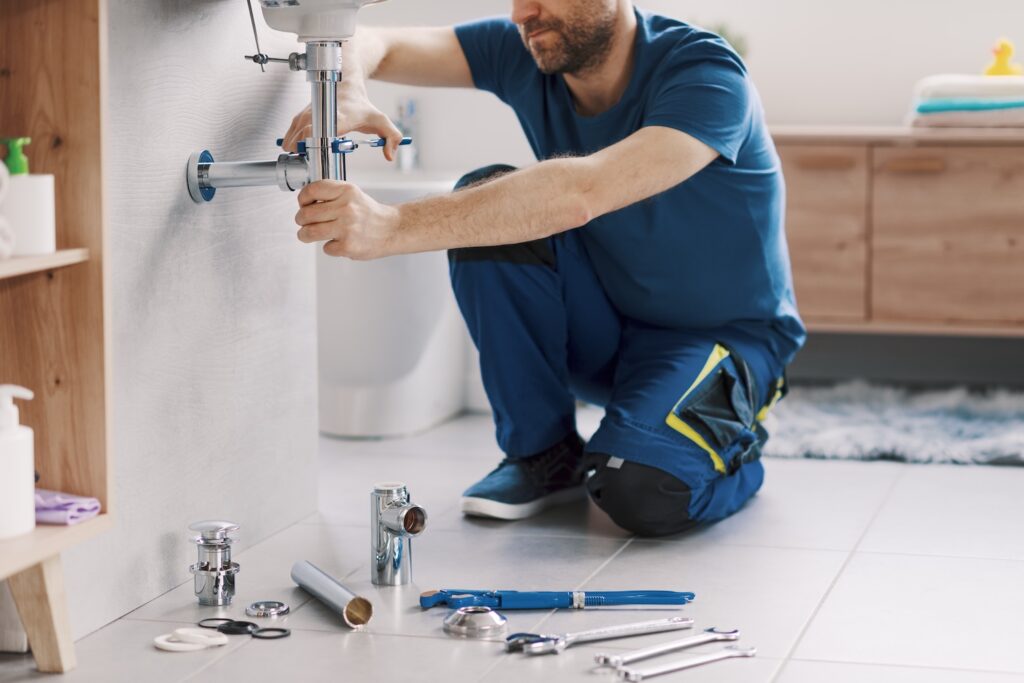
Cleaning a P-trap involves placing a bucket beneath it, unscrewing the slip joint nuts at each end of the curved section, and clearing whatever has collected inside. In homes with older plumbing, this is also an opportunity to inspect the trap for corrosion or cracking that may be contributing to slow drainage or causing a small leak.
Venting Problems
Every drain in a residential plumbing system requires adequate venting to allow air into the pipe as water drains out. Without that air supply, water drains slowly and often makes a gurgling sound as it goes. Vent pipes run up through the walls and exit through the roof, and they can become blocked by debris, bird nests, or leaves, particularly after a storm or during fall in East Texas neighborhoods with significant tree canopy.
A slow drain accompanied by a gurgling sound, or slow draining that affects multiple fixtures simultaneously, is a strong indicator that a venting issue rather than a localized clog is the underlying cause. This is not a DIY repair. Diagnosing and clearing a vent blockage requires professional equipment and access to the roof-level vent openings.
Scale Buildup in Older Pipes
In Tyler-area homes with older galvanized steel pipes, the interior surface of the pipe itself may be the problem. Galvanized steel corrodes from the inside out over decades, and the resulting buildup of rust and mineral scale can reduce a four-inch pipe’s effective interior diameter dramatically. Older pipes in advanced stages of corrosion produce slow drains throughout the home, not just at one fixture, and no amount of cleaning at the drain opening will resolve the underlying pipe condition.
When slow drains are widespread and persistent in an older home, and when standard clearing approaches produce only temporary improvement, a professional camera inspection of the drain lines is the appropriate next step. That inspection reveals whether the issue is localized buildup or a systemic pipe condition that warrants a more comprehensive solution.
What Not to Do
Chemical drain cleaners are widely available and aggressively marketed as the simple solution to slow drains. They work inconsistently, and the active chemicals, typically lye or sulfuric acid, are hard on pipe materials, particularly older pipes, and can accelerate corrosion in galvanized or cast iron systems. They are also genuinely hazardous materials to have in a home with children or pets. The EPA has noted concerns about the environmental impact of these chemicals once they enter the wastewater system.
A drain snake, proper cleaning of the stopper and P-trap, and the baking soda and vinegar approach are all preferable first responses. When those do not resolve the problem, the right move is a professional evaluation rather than repeated chemical applications.
Slow Drain That Will Not Clear? Tutor and Fuller Plumbing Is Here to Help.
Serving homeowners throughout Tyler and East Texas for more than 50 years, Tutor and Fuller Plumbing brings the expertise and genuine family-owned care that every plumbing job deserves. Contact us to schedule your service and get to the bottom of what is slowing your drain down for good.