
Why Is the Water Pressure Low Throughout My House?
Low water pressure throughout your house is usually caused by a partially closed main water valve, a faulty pressure regulator, mineral buildup or corrosion inside pipes, a hidden plumbing leak, or a problem with the municipal water supply. If every faucet and fixture has weak pressure, the cause is likely affecting your home’s main water supply rather than a single fixture.
When water pressure suddenly drops throughout your home, everyday tasks like showering, washing dishes, and doing laundry can quickly become frustrating. Tutor & Fuller Plumbing helps homeowners diagnose low water pressure and determine whether the problem comes from a simple valve issue, aging plumbing, a leak, or another part of the water supply system. Instead of guessing at the cause, a professional plumbing inspection can identify where pressure is being lost and recommend the appropriate solution. With a focus on dependable workmanship, clear communication, and customer care, Tutor & Fuller Plumbing helps homeowners restore reliable water flow while addressing underlying problems that could otherwise lead to more serious plumbing repairs.
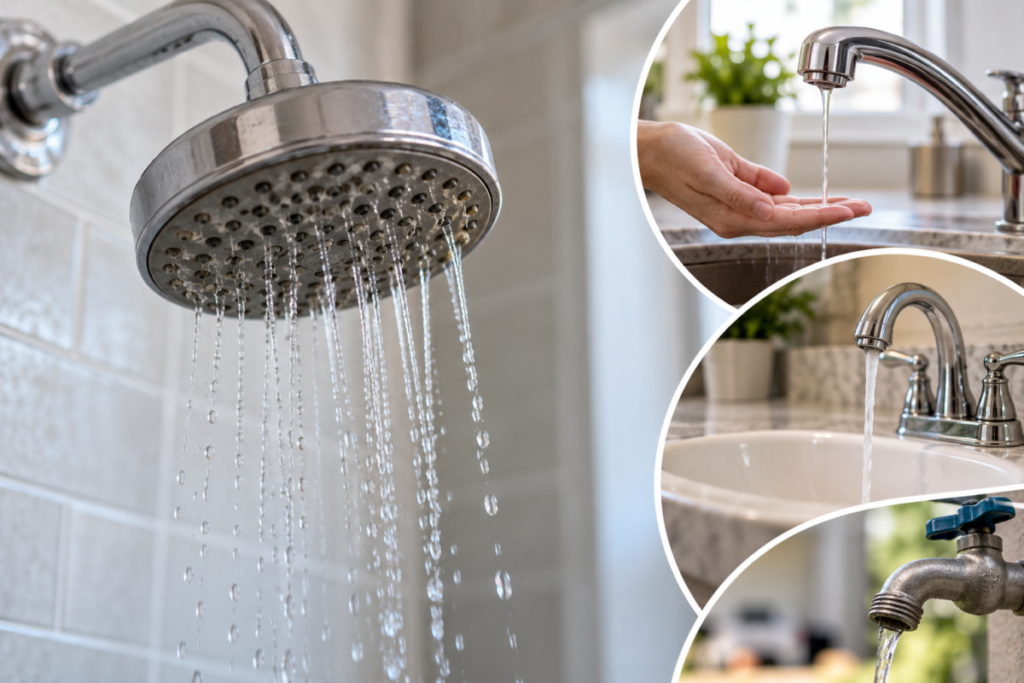
What Causes Low Water Pressure Throughout a House?
Whole-house low water pressure usually means something is restricting water before it reaches individual fixtures. The key to finding the cause is determining whether the problem appeared suddenly, developed gradually, or affects only certain times of day.
Could a Partially Closed Main Water Valve Cause Low Pressure?
Yes. A main water shutoff valve that is not completely open can restrict water flow throughout the entire house. This is one of the first things worth checking when every faucet suddenly seems weaker.
The main shutoff may have been adjusted during plumbing repairs or maintenance and not fully reopened. If your home has another valve near the water meter, an issue there can also affect the home’s water supply.
Homeowners can visually check whether an accessible main shutoff appears fully open. Avoid forcing a valve that is stuck, corroded, damaged, or difficult to turn, since doing so could cause a leak or break the valve.
Can a Bad Water Pressure Regulator Cause Low Water Pressure?
A failing pressure regulator can cause low or inconsistent water pressure throughout a home. Not every plumbing system has one, but in homes that do, the regulator controls incoming water pressure so it remains at a safe and usable level.
The U.S. Environmental Protection Agency’s WaterSense program recommends that residential water pressure be maintained between 45 and 60 pounds per square inch (psi) and notes that pressure above 60 psi can contribute to water waste and damage to pipes and fixtures.
Signs of a pressure regulator problem may include:
- Low pressure at multiple fixtures
- Water pressure that suddenly changes
- Pressure that fluctuates throughout the day
- Unusual noises from plumbing pipes
- Pressure that is consistently too high or too low
Testing water pressure with a pressure gauge can provide useful information, but determining whether a regulator is defective is generally best left to a plumber.
Can Old or Corroded Pipes Reduce Water Pressure?
Yes. Mineral deposits and corrosion can gradually narrow the inside diameter of plumbing pipes, reducing water flow throughout the home. This is especially worth considering when low pressure has worsened slowly over months or years.
Hard-water minerals can accumulate inside pipes and fixtures, while certain older pipe materials may corrode internally. As the available space for water to travel becomes smaller, homeowners may notice weaker showers, slower-filling appliances, and poor flow when multiple fixtures are used.
Possible clues include:
- Water pressure that has gradually decreased
- Discolored water
- Frequent plumbing leaks
- Visible corrosion on exposed piping
- Significant pressure drops when several fixtures run simultaneously
Cleaning a faucet aerator can solve mineral buildup at one fixture, but it will not correct buildup or deterioration inside the home’s main plumbing lines.
Does Low Water Pressure Mean I Have a Leak?
Low water pressure throughout the house can be a warning sign of a plumbing leak, particularly if the pressure dropped suddenly. When water escapes through a damaged pipe before reaching your fixtures, less water may be available at faucets and appliances.
The EPA estimates that the average family’s household leaks can waste nearly 10,000 gallons of water every year, and 10 percent of homes have leaks that waste 90 gallons or more per day.
Watch for other signs of a hidden leak, including:
- An unexplained increase in water bills
- Damp spots on walls, ceilings, or floors
- Musty odors
- Water stains
- The sound of running water when fixtures are off
- Wet or unusually green areas outside
- Movement at the water meter when no water is being used
Low pressure combined with evidence of a leak should be investigated promptly. Hidden leaks can cause structural damage, encourage mold growth, and waste significant amounts of water.
Could the Water Utility Be Causing Low Water Pressure?
Yes. If your neighbors are also experiencing low pressure, the issue may be related to the public water supply rather than your home’s plumbing. Utility maintenance, water main problems, unusually high demand, or other supply disruptions can temporarily affect pressure.
Before scheduling plumbing work, it can be helpful to determine whether nearby homes have the same problem. You can also check with your local water provider for reported outages, repairs, or pressure issues.
If neighboring properties have normal pressure while your entire home does not, the problem is more likely located somewhere within your property’s plumbing system.
How to Troubleshoot Whole-House Low Water Pressure
The fastest way to narrow down a water pressure problem is to determine how many fixtures are affected and whether the change happened suddenly or gradually.
Try these steps:
- Test several fixtures. Check hot and cold water at faucets, showers, and outdoor spigots.
- Compare hot and cold pressure. If only hot water has low pressure, the water heater or hot-water piping may be involved.
- Check the main shutoff valve. Make sure an accessible valve is completely open, but never force it.
- Ask your neighbors. Similar problems nearby may indicate a municipal supply issue.
- Look for leaks. Check under sinks, around toilets and appliances, and near exposed plumbing.
- Review your water bill. An unexplained increase can be another clue that water is escaping somewhere.
- Call a plumber if the cause remains unclear. Professional testing can identify pressure regulator problems, leaks, restrictions, and deteriorating pipes.
A single weak faucet often points to a clogged aerator or fixture-specific problem. Weak pressure everywhere requires a broader investigation.
Low Water Pressure FAQ
Why did my whole house suddenly lose water pressure?
A sudden pressure drop can result from a partially closed valve, plumbing leak, failing pressure regulator, or municipal water supply problem. If the change is severe or accompanied by signs of leaking water, have the plumbing system inspected promptly.
Why is my water pressure low only when two faucets are running?
A major pressure or flow drop when multiple fixtures operate can indicate restricted pipes, inadequate supply, a pressure regulator issue, or another plumbing limitation. A plumber can test the system to identify where flow is being restricted.
Can I increase my home’s water pressure myself?
Some simple causes, such as a partially closed accessible shutoff valve or clogged faucet aerator, may be easy to identify. Adjusting pressure regulators or modifying supply piping should be handled carefully because excessive water pressure can damage plumbing fixtures and pipes.
When should I call a plumber for low water pressure?
Call a plumber when low pressure affects the entire house, appears suddenly without explanation, keeps getting worse, or occurs with signs of a leak. Professional diagnosis is also appropriate when valves and municipal supply issues have been ruled out.
Restore Reliable Water Pressure in Your Home
Whole-house low water pressure is more than an inconvenience. It can point to a valve problem, failing pressure regulator, restricted plumbing, or hidden leak. Identifying the cause early can help restore comfortable water flow and prevent an underlying plumbing issue from becoming more expensive.
Tired of dealing with weak water pressure? Contact Tutor & Fuller Plumbing to have your plumbing system professionally evaluated.