
What Are the Signs Your Home Needs a Water Filtration System?
Your home may need a water filtration system if your tap water has an unpleasant taste or odor, appears cloudy or discolored, leaves mineral deposits on fixtures, causes frequent spots on dishes, or contains visible sediment. Recurring scale buildup and changes in water quality are also good reasons to have your water tested and determine whether filtration or water conditioning is appropriate.
At Tutor & Fuller Plumbing, we help homeowners improve the water they use every day with professionally selected and installed water filtration solutions. Water quality issues are not always obvious, and the right solution depends on what is actually present in your water. Rather than taking a one-size-fits-all approach, our team can evaluate your water concerns and recommend a system suited to your household. From whole house water filtration that treats water throughout the home to single service filtration for drinking and cooking, we focus on practical solutions that improve water quality while protecting your plumbing investment.
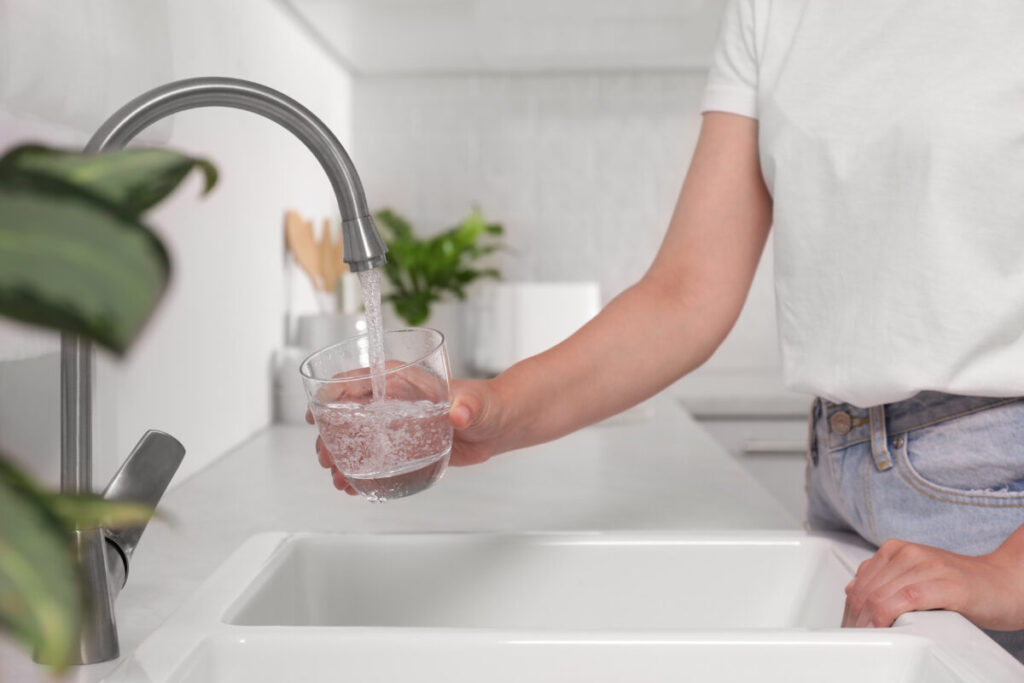
How Do You Know If Your Tap Water Needs Filtration?
Changes in your water’s taste, smell, appearance, and the residue it leaves behind are some of the clearest signs that it is worth investigating your home’s water quality.
The U.S. Environmental Protection Agency (EPA) specifically identifies changes in odor, color, and taste as reasons private well owners should consider testing their water. The EPA also maintains secondary drinking water guidelines addressing aesthetic issues such as taste, odor, and color.
Not every water quality issue means your water is unsafe. However, persistent changes should not simply be ignored. Testing can help identify the cause and determine whether a whole house filter, targeted drinking water filter, water conditioning system, or another solution makes sense.
1. Does Your Tap Water Taste or Smell Strange?
An unusual taste or odor is one of the most noticeable reasons to investigate your home’s water quality. Depending on the source, homeowners may describe their water as metallic, salty, earthy, or unpleasantly chlorinated.
Different substances can produce different taste and odor problems. According to the U.S. Geological Survey (USGS), iron can give drinking water an unpleasant taste, while water with high concentrations of dissolved solids can taste salty. The EPA also lists chloride, copper, iron, manganese, sulfate, zinc, pH, and total dissolved solids among factors associated with taste or odor concerns.
If the taste or smell of your water has suddenly changed, testing is particularly important. A professional evaluation can help determine what is causing the issue before a filtration system is selected.
2. Why Are There White Spots and Scale on Your Fixtures?
Frequent white or chalky deposits around faucets, showerheads, sinks, and appliances often indicate hard water. Hardness primarily comes from dissolved calcium and magnesium.
The USGS classifies water containing 121 to 180 milligrams per liter of calcium carbonate as hard and water above 180 mg/L as very hard. Hard water is generally considered a nuisance rather than a health concern, but its effects throughout a home can become frustrating and costly.
Common signs include:
- White scale around faucets and showerheads
- Spots or film on glasses and dishes
- Soap that does not lather easily
- Mineral deposits inside plumbing fixtures
- Recurring buildup in water-using appliances
Hardness also matters below the surface. The USGS reports that calcium and magnesium can form mineral scale inside pipes and on heating surfaces. This buildup can impede water flow and reduce heating efficiency.
A water quality evaluation can determine whether filtration, water conditioning, or another treatment method is the better solution.
3. Is Cloudy, Discolored, or Sediment-Filled Water a Warning Sign?
Persistent cloudiness, unusual color, or visible particles are reasons to investigate your water rather than guessing at the cause.
The EPA identifies cloudy, frothy, or colored water as conditions that can warrant testing. Staining on plumbing fixtures or laundry can also point toward substances such as iron, copper, or manganese.
The USGS notes that dissolved iron can cause brownish-red stains on laundry, sinks, bathtubs, and toilets. It may also negatively affect plumbing and heating systems.
Keep in mind that appearance alone cannot tell you exactly what is in your water. If discoloration appears suddenly, persists after running the faucet, or affects multiple fixtures, professional water testing is a smarter first step than simply purchasing a generic filter.
4. Can Poor Water Quality Affect Your Plumbing and Appliances?
Yes, certain water quality problems can contribute to buildup and reduced efficiency in plumbing and water-using equipment.
Hard water is an especially common example. When hard water is heated inside a water heater, calcium carbonate deposits can form. According to the USGS, this scale can reduce equipment life, increase water-heating costs, decrease the efficiency of electric water heaters, and clog pipes.
You may notice signs such as:
- Recurring scale inside fixtures
- Reduced flow at faucets or showerheads
- Heavy mineral buildup on water-using appliances
- Frequent cleaning needed to remove deposits
- Poor soap and detergent performance
Addressing the underlying water condition can help protect more than your drinking water. A properly chosen whole house water treatment system can address water before it travels through the home’s plumbing.
5. Should You Test Your Water Before Buying a Filtration System?
Yes. Testing is one of the best ways to choose a water treatment system based on evidence rather than assumptions.
Different filters are designed to address different water quality concerns. A system intended to reduce sediment, for example, may not solve a hardness problem. Likewise, a homeowner primarily concerned about drinking water may need a different solution from someone dealing with scale throughout the entire house.
The EPA advises consumers to understand their water before selecting home filtration, and its current drinking-water resources provide guidance on both testing and filtration.
At Tutor & Fuller Plumbing, the process starts by identifying your concerns and evaluating your water. From there, we can recommend an appropriately sized system and complete the installation correctly.
Depending on your needs, that could include:
- Whole house water filtration, which treats water as it enters the home
- Single service filtration, which targets drinking and cooking water at a specific fixture
- Water conditioning, when scale and hardness are the primary concerns
Choosing the right technology matters just as much as deciding to filter your water in the first place.
Water Filtration FAQs
Does bad-tasting tap water mean it is unsafe?
Not necessarily. Taste and odor problems can be aesthetic rather than health-related, which is why the EPA has separate secondary guidelines for many nuisance contaminants. A noticeable or sudden change in taste, smell, or appearance is still a good reason to investigate and test your water.
Will a water filter fix hard water?
It depends on the system. Standard filtration and hardness treatment are not the same thing, so homeowners experiencing scale should have their water evaluated and choose a system specifically designed to address their water conditions.
Is a whole house water filter better than an under-sink filter?
Neither is automatically better. A whole house system makes sense when you want to address water quality throughout the home, while an under-sink or single service system can be a practical option when drinking and cooking water are your main concerns.
How often should a home water filtration system be serviced?
Maintenance schedules vary by system, filter media, household water usage, and water quality. Follow the manufacturer’s recommended replacement and maintenance schedule, and have the system checked if you notice changes in water quality, flow, taste, or odor.
Ready for Cleaner, Better-Tasting Water?
If you’re noticing strange tastes or odors, mineral buildup, cloudy water, sediment, or other signs of water quality problems, Tutor & Fuller Plumbing can help determine what is happening and recommend the right solution for your home.
Ready to find out if your home needs a water filtration system? Schedule service with Tutor & Fuller Plumbing today.