What Should You Do First During a Plumbing Emergency?
The first thing you should do during a plumbing emergency is shut off the water supply to stop additional damage. Once the water is off, turn off electricity if water is near electrical outlets, contain any standing water if it is safe, and call a licensed plumber. Acting quickly can significantly reduce repair costs and protect your home from extensive water damage.
Every plumbing emergency is stressful, but knowing the right steps before help arrives can make all the difference. At Tutor & Fuller Plumbing, we have helped homeowners respond to everything from burst pipes and overflowing toilets to water heater failures and major leaks. Our experienced team understands that emergencies rarely happen at a convenient time, which is why we focus on fast, dependable service and honest recommendations. We believe informed homeowners are better prepared to protect their property, and this guide explains the essential emergency plumbing tips every homeowner should know before disaster strikes.
Emergency Plumbing Steps That Can Help Prevent Major Water Damage
How Do You Shut Off the Water During a Plumbing Emergency?
The fastest way to limit damage is by stopping the water flow immediately.
Every homeowner should know the location of:
- The home’s main water shutoff valve
- Individual shutoff valves under sinks and behind toilets
- The water heater shutoff valve
According to the Insurance Information Institute, water damage and freezing are among the leading causes of homeowner insurance claims each year. Quickly shutting off the water can dramatically reduce the extent of damage and the overall cost of repairs.
Should You Turn Off the Water Heater?
Yes. If you’ve shut off your home’s water supply, you should also turn off the water heater.
Running a water heater without an adequate water supply can damage the unit.
For safety:
- Turn off gas water heaters at the gas control valve.
- Switch off electric water heaters at the circuit breaker.
- Wait until water service is restored before restarting the system.
This simple step can prevent expensive damage to your water heater.
What Plumbing Problems Require Immediate Attention?
Some plumbing issues cannot wait until the next business day.
Call an emergency plumber immediately if you experience:
- Burst pipes
- Sewer backups
- Major water leaks
- Overflowing toilets that will not stop
- No running water throughout the home
- Water leaking from the ceiling
- A failed water heater causing flooding
- Frozen pipes that have burst
These situations can quickly lead to structural damage, mold growth, and costly repairs if left untreated.
What Can You Do While Waiting for the Plumber?
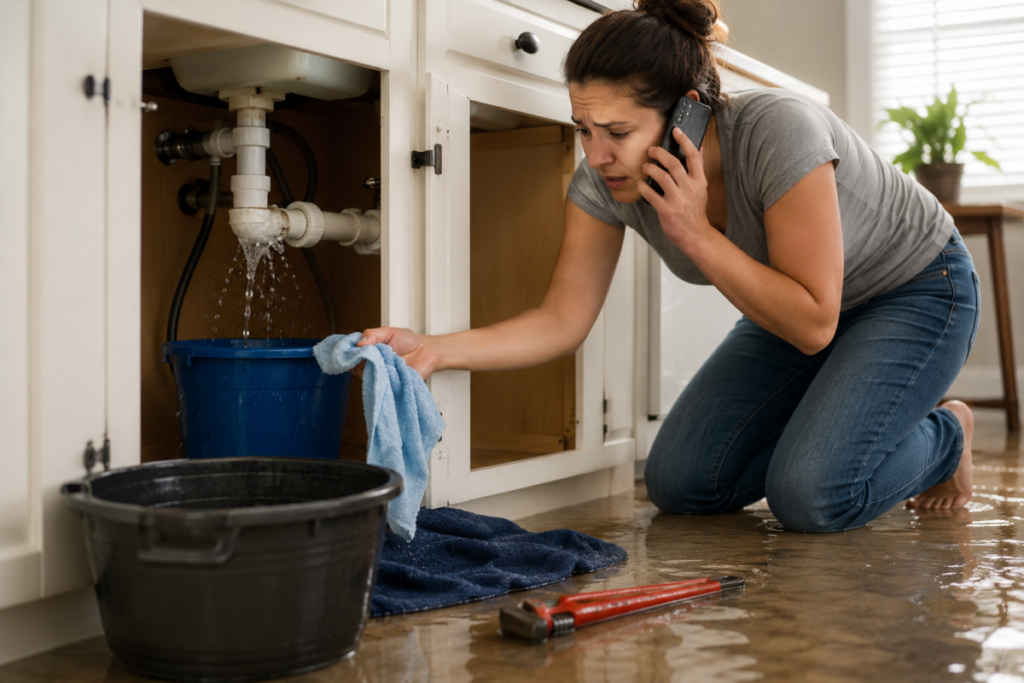
After stopping the water, there are several safe steps you can take to minimize damage.
You should:
- Move furniture and valuables away from standing water.
- Use towels, mops, or a wet vacuum to remove excess water.
- Place buckets beneath active leaks.
- Open windows or run fans to improve ventilation if it is safe.
- Take photos of the damage for insurance documentation.
Avoid attempting major plumbing repairs yourself, especially if pipes, gas lines, or sewer systems are involved.
What Should You Never Do During a Plumbing Emergency?
Some actions can make the problem much worse.
Avoid:
- Using chemical drain cleaners during a backup
- Ignoring small leaks that suddenly become larger
- Attempting to solder or replace pipes without experience
- Flushing toilets repeatedly during a clog
- Turning water back on before repairs are complete
Professional repairs help ensure the issue is fixed safely and correctly the first time.
Why Being Prepared Matters
Preparation can save valuable time when an emergency occurs.
Every homeowner should know:
- Where the main water shutoff valve is located
- Where the electrical panel is located
- How to reach a trusted plumbing company
- Where important plumbing fixtures have individual shutoff valves
Keeping a basic emergency kit with towels, buckets, a flashlight, adjustable wrench, and work gloves can also help you respond safely while waiting for professional assistance.
According to the Environmental Protection Agency (EPA), household leaks waste nearly one trillion gallons of water nationwide every year. Catching plumbing issues early and responding quickly can help conserve water while protecting your home.
Frequently Asked Questions
Can a small plumbing leak become an emergency?
Yes. Even a small leak can quickly become a major problem if a pipe bursts or water reaches flooring, walls, or electrical systems. Addressing leaks early helps prevent costly damage.
Is it safe to use plumbing fixtures during a major leak?
No. Avoid using sinks, toilets, dishwashers, or washing machines until the problem has been identified and the water supply is safely restored.
How often should homeowners inspect their plumbing?
A visual inspection every few months is a good habit. Scheduling a professional plumbing inspection annually can help identify hidden problems before they become emergencies.
Can homeowners fix a burst pipe themselves?
Temporary measures like shutting off the water and containing the leak are appropriate. Permanent repairs should always be completed by a licensed plumber to ensure safety and long-term reliability.
Ready for Fast, Reliable Emergency Plumbing Service?
Plumbing emergencies can happen without warning, but knowing how to respond can protect your home from extensive damage. If you’re facing a burst pipe, overflowing fixture, major leak, or any urgent plumbing issue, the experienced team at Tutor & Fuller Plumbing is ready to help. Contact us today for prompt, professional plumbing service you can trust.